Mastery of Time
A Fun Guide to Verb Tenses for Kids!
Have you ever wanted to travel through time? 🚀 You don’t need a real time machine to do it! Every time you speak or write, your verbs act as your personal time machine.
They tell your reader if something already happened, is happening right now, or will happen in the future!
Today, we are going to learn how to master the three main verb tenses. Once you learn these tricks, you will be able to guide your readers safely through time in every story you write! 🧭
🧭 The Quick Time Traveler Checklist
Before we jump into our time machine, remember that verbs are action words (like run, jump, think, or play). To change the time of your sentence, you just have to tweak the verb! ⏰
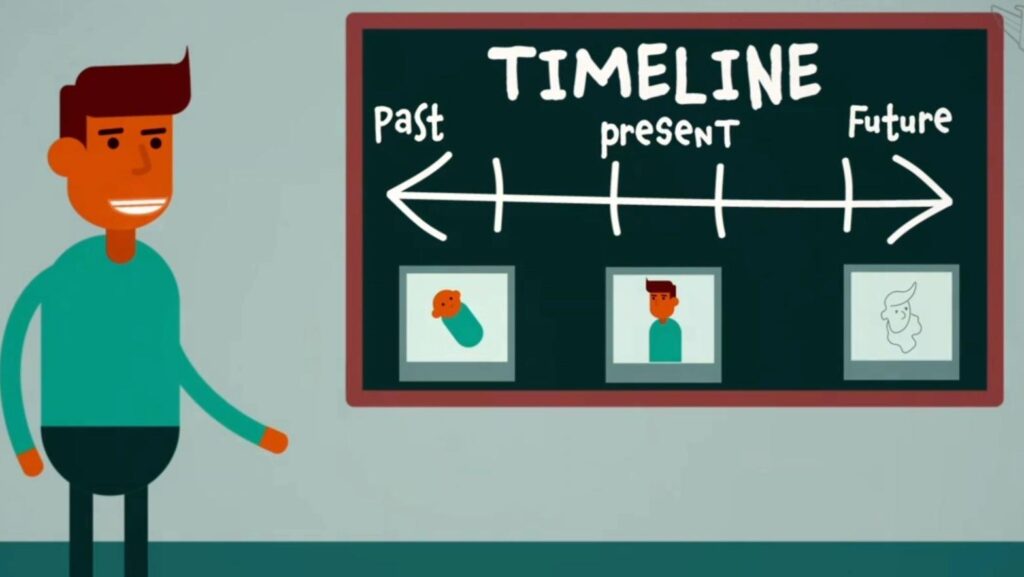
⏳ 1. The Past Tense (What Already Happened)
The past tense is used for things that have already occurred. Think of it as looking at a photograph of yesterday!
- 🛠️ The Golden Rule: For most regular verbs, just add -ed to the end of the word (like walk becomes walked).
- 💡 Watch Out! Some verbs are “irregular” and change completely (like run becomes ran, or eat becomes ate).
Examples:
- Yesterday, I played soccer with my friends.
- We baked chocolate chip cookies this morning.
- The bird flew high into the sky.
🏃♂️ 2. The Present Tense (What is Happening Now)
The present tense is used for actions happening right this second, or for things that happen regularly!
- 🛠️ The Golden Rule: Use the plain form of the verb (like run). If you are talking about one person or thing (he, she, it), add an -s to the end (like runs).
- 💡 Continuous Action: You can also add -ing to show something is actively ongoing right now (like is running).
Examples:
- Right now, I am reading a fantastic book.
- She loves to paint colorful pictures.
- The sun shines brightly in the sky.
🚀 3. The Future Tense (What Will Happen Later)
The future tense is used for actions that haven’t happened yet, but will happen later today, tomorrow, or even years from now!
- 🛠️ The Golden Rule: Simply add the magic word will right before your baseline verb (like will run, will jump).
- 💡 How to remember: The word “will” acts like the engine driving your verb into tomorrow!
Examples:
- Tomorrow, our class will visit the science museum.
- I will clean my bedroom after school.
- Next year, we will travel to the beach.
📊 Summary Table: Time Traveling with Verbs
| Verb Tense | When It Happens | The Secret Trick | Quick Example |
|---|---|---|---|
| Past Tense | Yesterday or earlier | Add -ed | I talked. |
| Present Tense | Right now / regularly | Baseline or add -s / -ing | I talk. / I am talking. |
| Future Tense | Tomorrow or later | Add will before the verb | I will talk. |